
Virtual Villagers 7
Last Day of Work, LLCSimulation
4.6176.00 Reviews
- Version
- 1.3.7
- Installs
- 50.00K
- Age Rating
- Everyone
Screenshots




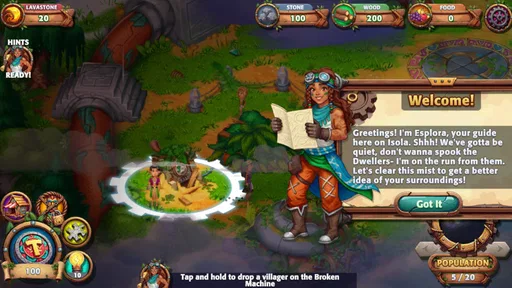
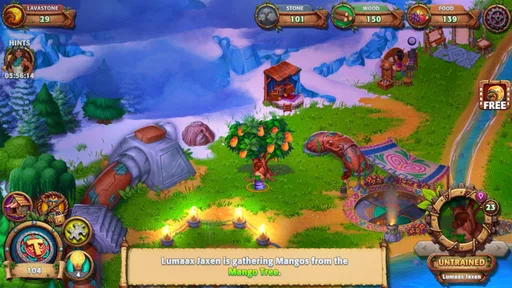
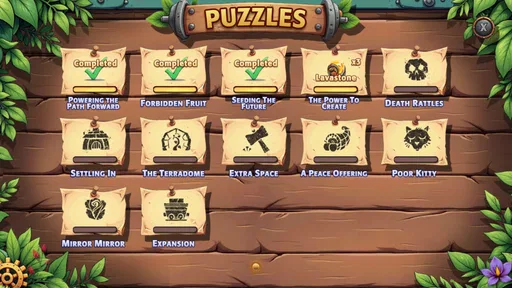
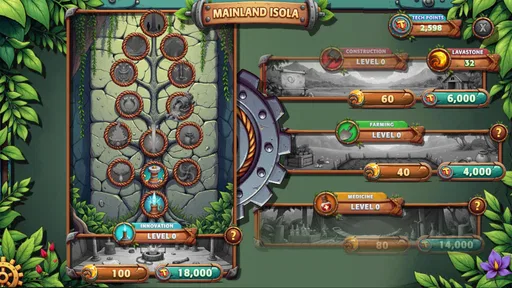
Our Review of Virtual Villagers 7
 Analysis by Appyee
I approached Virtual Villagers 7 as a village-life simulation rather than a game that demands constant attention. Its central appeal is the feeling of guiding a small community over time, making choices, watching people work, and checking how the settlement develops. That slower rhythm makes it easy to imagine as a companion for short visits during the day, although it also means the experience may feel too patient for anyone looking for immediate action.
Developed by Last Day of Work, LLC, this free simulation is aimed at Everyone and runs on devices using Android or iOS 9 and later. The current version is 1.3.7, and the game has reached over 50 thousand installs with a 4.6 average from around 1.8 thousand ratings. Those figures suggest a small but clearly interested audience, and my impression is that the game is most appealing when you enjoy observing a community instead of simply trying to beat a level.
How Virtual Villagers 7 works for different players and situations
I find this game easiest to judge by the kind of attention it asks for: it suits players who enjoy checking a community, making one considered choice, and leaving room to see how things develop. That makes it a gentler option for a shared, low-pressure play session, while anyone who wants a clear win condition in every sitting may prefer a more structured simulation. The next section looks at how that difference plays out in ordinary use.
Readable choices and a navigation style that rewards patience
The strongest part of the experience is its straightforward premise: I lead a tribe and help shape village life. That gives every visit a clear purpose, even when I only have a few minutes. Rather than presenting the game as a complicated management dashboard, it frames progress around the people living in the settlement. For a new player, this is less intimidating than a simulation built around long menus, dense charts, and several resource systems introduced at once.
That simplicity is especially useful for players who prefer to learn by watching cause and effect. I can make a decision, observe what changes, and gradually build an understanding of the village instead of memorizing a large rulebook before playing. The game’s idea is easy to explain to someone else as well: guide a tribe, pay attention to its needs, and return to see how life has moved forward.
My advice is to avoid treating every screen as something that must be mastered immediately. The better approach is to identify the most important task in front of the village, complete or monitor it, and then leave the game. This reduces mental clutter and makes the slower pace feel intentional. Players who enjoy simulation games often get more from it when they keep a simple personal routine rather than tapping through every available option.
There is also a useful distinction between visual clarity and information density. A village simulation can look friendly while still asking the player to remember many small details. I found that the game’s relaxed concept helps with orientation, but anyone who has difficulty tracking changing priorities may still benefit from checking one objective at a time. That is not a flaw unique to this title; it is a natural challenge of supervising a living settlement.
Motor comfort, sensory load, and the value of short sessions
Because this is not an action game, it is a more comfortable choice for people who do not want rapid reactions, precision aiming, or repeated high-speed gestures. The basic fantasy is about leadership and observation, not reflex performance. That makes it suitable for a quiet break, a commute, or a relaxed evening when I want interaction without the pressure found in many competitive games.
The slower structure can also help players who need time to process information. I can pause mentally between decisions, consider what the tribe needs, and return later rather than being punished for missing a split-second opportunity. For me, that creates a gentler relationship with the game. It feels closer to tending a small digital community than responding to an alarm every few seconds.
Still, “relaxed” does not automatically mean comfortable for everyone. Any mobile simulation can become tiring if a player repeatedly scans a busy scene or performs the same touch actions for a long period. Someone with hand pain or limited reach may prefer brief sessions, using the game as a check-in rather than a long play marathon. A stylus or a larger screen may make interaction easier for some people, but that depends on the device and the player’s own setup, so I would not treat either as essential.
Players sensitive to visual motion, bright colors, or small on-screen details should judge the presentation on their own device before committing to extended sessions. The game’s village setting is inviting, but a pleasant theme does not guarantee that every visual element will suit every sensory preference. I would begin with a short session, lower general device brightness if needed, and avoid playing for long periods when the screen itself becomes tiring.
Why it fits fragmented time better than many simulation games
One of the most practical strengths is how naturally the concept fits around ordinary routines. I can imagine checking the village while waiting for an appointment, during a lunch break, or after finishing household tasks. The game does not need to become the main event of the day. Its appeal comes from returning to a continuing settlement and seeing what deserves attention next.
That makes it a reasonable option for a player who wants a low-pressure mobile hobby. It can also work for families who enjoy discussing choices together, provided the person playing is comfortable with the touch controls and the pace. The Everyone content rating makes it approachable as a general-audience game, although younger players may still need help understanding decisions and any purchase prompts.
The trade-off is that fragmented play only works if the player is comfortable with gradual progress. If I want a complete challenge in a single sitting, this is not the right format. The village-life design asks me to accept unfinished work and return later. That can be satisfying for someone who likes continuity, but frustrating for anyone who expects every session to deliver a dramatic conclusion.
Another useful habit is to decide what kind of visit I am making. Sometimes I open the game simply to observe and understand the village. At other times, I focus on one practical goal and stop once I have made a sensible decision. This prevents the experience from turning into aimless tapping and makes the limited time feel worthwhile.
Where it differs from faster and heavier alternatives
Compared with action-oriented mobile games, this simulation is far less demanding on reaction speed. Compared with large strategy games, it presents a more personal scale: I am thinking about a tribe and its settlement rather than managing a huge empire, a battlefield, or a complicated economic network. That narrower focus is the reason I would recommend it to someone who finds traditional strategy interfaces overwhelming.
It is also different from purely decorative village builders. The attraction here is not only arranging a pretty space; it is taking responsibility for a community and watching the consequences of guidance. If your favorite part of a building game is designing layouts, another title may offer more freedom. If you prefer seeing a settlement feel inhabited, this approach is more interesting.
On the other hand, players who want deep control over every system may eventually find the experience too gentle. A simulation built around detailed production chains, extensive customization, or competitive goals may be a better match for them. I would choose Virtual Villagers 7 when I want a readable, ongoing village story, not when I am searching for the most technically demanding management game on a phone.
Small habits that make the experience clearer
The first habit I recommend is to resist making several changes at once. When multiple decisions happen together, it becomes difficult to know which one helped the village and which one created a new problem. I get more useful feedback when I make a focused adjustment, observe the result, and then decide what deserves attention next.
The second is to use a consistent checking order. I start with the overall state of the tribe, then look for the most urgent visible need, and only afterward think about longer-term improvements. This simple workflow is valuable for players who become overloaded by open-ended simulations because it turns a broad village into a sequence of manageable observations.
The third is to treat return visits as part of the design rather than as interruptions. I do not expect every opening to produce a major breakthrough. Sometimes the useful outcome is learning that the community is stable and that no drastic intervention is needed. That mindset prevents unnecessary decisions and makes the game feel more like stewardship than constant optimization.
There is also a social use case that the store summary does not communicate on its own. A parent, partner, or friend can watch the village and discuss what they would do next, even if only one person is holding the device. That makes the game easier to share than a title where success depends entirely on individual reflexes. The conversation becomes part of the entertainment.
Free access, purchases, and choosing the right commitment
The game is free to download, which makes trying its pace relatively easy. That matters here because the central question is not simply whether the village looks appealing; it is whether I enjoy returning to a gradual simulation. A short trial session can answer that better than reading a description.
In-app purchases range from $0.99 to $99.99 per item. I would therefore recommend deciding in advance whether I am comfortable spending money inside the game, especially if a younger player will use the device. Free entry is helpful, but the presence of optional purchases means the overall experience should be approached with the same budget awareness as other free-to-play games.
My practical rule is to play long enough to understand the normal rhythm before buying anything. If the village is enjoyable without spending, that tells me the core loop suits me. If I feel pressured to purchase simply to make the game tolerable, that is a sign to stop rather than treat spending as a solution. This is particularly important for families managing a shared phone or tablet.
The game’s Everyone rating makes it broadly accessible in age terms, but age suitability and ability suitability are not the same thing. A child may understand the theme while still needing assistance with reading, planning, or purchase decisions. Likewise, an older player may like the calm pace but prefer a larger display for easier viewing. The best fit depends on the person, not only on the rating.
Barriers that remain despite the welcoming concept
The biggest limitation is the lack of immediacy. Players who need strong feedback, quick victories, or constant novelty may interpret the quiet pace as repetition. I would not recommend it to someone who already knows they lose interest when progress is measured in small changes over time.
Another barrier is cognitive rather than physical. Leading a tribe sounds simple, but an ongoing community can still ask the player to remember priorities and consequences. Someone who prefers clearly separated stages may find a continuing village less comfortable than a level-based puzzle or a turn-by-turn strategy game. The solution is to use short, focused visits, but that only helps if the player enjoys gradual decision-making in the first place.
Touchscreen play can present its own challenges. People with tremors, reduced dexterity, or difficulty distinguishing small interactive areas may need a larger device or more time with each action. I would test the game before recommending it as a shared activity for someone with specific motor needs. The absence of rapid action is helpful, but it does not remove every interaction barrier.
There is also the question of attention context. A player using the game in a noisy environment may miss visual changes or lose track of what was happening between visits. Conversely, someone who needs a game that can be understood instantly with sound off may prefer a more self-contained puzzle experience. I find it most comfortable when I can give the village a quiet minute rather than squeeze it into a moment of distraction.
Who should play it and who should choose another game
I would recommend this title to people who like digital communities, gentle management, and the satisfaction of checking on a place that continues beyond a single session. It is particularly suitable for players who find action games tiring and want a simulation that can be approached without reflex pressure. The free entry also makes it a sensible experiment for anyone curious about the Virtual Villagers style.
I would be more cautious about recommending it to players who want extensive construction freedom, highly detailed economic planning, competitive rankings, or a definite ending in every sitting. Those players may be happier with a deeper city builder, a conventional strategy game, or a fast puzzle title. This is not a criticism of the game’s identity; it is simply a reminder that its appeal depends on enjoying a slower form of progress.
For accessibility-minded players, I see the game as potentially welcoming because of its calm simulation format and general-audience presentation, but I would still test it personally. Device size, visual comfort, touch accuracy, reading needs, and tolerance for ongoing decisions all matter. The most inclusive way to approach it is to match the game’s pace to the player’s own energy and attention, rather than assuming that a relaxed theme solves every access issue.
My overall view after living with the village
Virtual Villagers 7 works best when I stop expecting it to behave like an action game. Its pleasure comes from guiding a tribe, noticing gradual change, and making a few thoughtful decisions during each visit. The structure gives it a friendly identity that is easy to share, easy to sample for free, and less demanding than many strategy alternatives.
It is not perfect for every player. The ongoing pace may feel slow, touch interaction can still be difficult for some people, and the range of in-app purchases calls for sensible boundaries. Players looking for deep customization or immediate challenge should look elsewhere. I also would not promise that every device or sensory preference will feel equally comfortable without trying it first.
For me, the best reason to install it is the combination of low-pressure supervision and a village that gives short sessions a purpose. The developer has built a game for people who enjoy returning, observing, and gently steering a community rather than dominating every minute. With the current version at 1.3.7, an Everyone content rating, and a free starting point, it is worth a careful trial if that sounds like your kind of relaxation.
My final recommendation is simple: try it when you want a patient village simulation, set a spending limit before exploring purchases, and give yourself permission to play in small visits. If you enjoy that rhythm, Virtual Villagers 7 can become an easygoing daily check-in. If you need speed, tight control, or a highly structured challenge, another game in the simulation category will probably serve you better.
Verdict
Strengths of Virtual Villagers 7
- Relaxing gameplay suited to short, casual sessions.
- Villagers continue working while you are away.
- Island exploration gradually reveals new areas and secrets.
- Family-friendly challenges are easy to understand.
- Distinct villager roles make settlement management engaging.
Limitations of Virtual Villagers 7
- Progress can feel slow without frequent check-ins.
- Some tasks require patience or repeated resource gathering.
- The small island setting may feel limited over time.
- Later puzzles can be vague without experimentation.
- Battery use may increase during longer play sessions.
Similar Picks in This Category
View All
Truckers of Europe 3
Wanda Software4.3

Town Building Life Simulator
XGame Global4.2

Fidget Toys Trading・Pop It 3D
Freeplay Inc4.7

Sculpt People
CrazyLabs LTD4.4

Scary Teacher 3D
Z & K Games4.2

Hair Tattoo: Barber Shop Game
CASUAL AZUR GAMES4.3
Frequently Asked Questions
What is Virtual Villagers 7 about?
Virtual Villagers 7 is a casual village-management and simulation game in which you guide a small group of villagers as they build a community, gather resources, solve problems, and explore their surroundings. The game focuses on gradual progress rather than fast action, so it is best suited to players who enjoy relaxed management, discovery, and watching characters develop over time.
Can I play Virtual Villagers 7 offline?
The core gameplay is generally designed to be accessible without a constant internet connection, which makes it convenient for short sessions while traveling or when mobile data is unavailable. However, certain functions may still require internet access, including downloading the game, receiving updates, restoring purchases, displaying advertisements, or using platform-related services. Availability can vary by device and version.
Is Virtual Villagers 7 free to download and play?
Virtual Villagers 7 may be available as a free download, but the exact payment model depends on the edition, operating system, and store listing in your region. Players should check whether the game includes advertisements, optional in-app purchases, or premium content before installing it. The main village experience can usually be started without paying, although some features may be limited.
Does Virtual Villagers 7 contain in-app purchases or advertisements?
The game may include optional purchases or advertising, depending on the version distributed for Android or iOS. These elements can help unlock content, speed up certain activities, or support the developer, but they are not necessarily required to enjoy the basic simulation. Before downloading, review the official store page for current pricing, purchase restrictions, and advertising information.
Is Virtual Villagers 7 suitable for children and casual players?
Virtual Villagers 7 is generally approachable for casual players because its controls are simple and its progression is based on assigning tasks, observing villagers, and making gradual decisions. It does not demand fast reflexes, making it suitable for relaxed play. Parents should still check the store rating, privacy details, advertisements, and purchase settings before allowing children to play.
Play our best games!


